Thursday, 22 October 2015

Auteur theory - Edgar Wright

As part of the research and planning for our coursework, we had to find out about a famous film auteur. Here is our presentation about our chosen director Edgar Wright. This presentation was made by me, Luke, Dan and Charlie.

Rough script:
Edgar Wright was born on April 18th 1979 in Dorset. He is a director and writer know for Shaun Of The Dead, Hot Fuzz, Scott Pilgrim vs. The World and The Worlds End. His interesting style of fast editing, whip pans and crash zooms have made him a well respected director. He also mainly work with Simon Pegg and Nick Frost, as well as using deadpan humour in fast-paced moments. Im going to look at his different films and show the effects and styles of Wright that I might want to use in my music video or short film.


The first film we will look at is the first is Shaun Of The Dead, which was released in 2004. A parody of zombie horror films, it put the normal Simon Pegg in an extra-ordinary scenario. The film was mainly influenced by George A. Romero, who is a director of lots of zombie films like Night Of The Living Dead and Dawn Of The Dead, which this films name comes from. Wright also references Romeros films a lot. Shaun Of The Dead uses a lot of whip pans and crash zooms to move from one shot to the next, and also display time moving on quickly. With the whip pans in Shaun Of The Dead, the director of photography was David M. Dunlap, who worked on Goodfellas, was able to do the whip pans on set instead of speeding them up in the editing. This made these kind of shots more realistic and less digital. He also likes having the same shot but the time of day moving on very fast, to keep the fast pace of the film going. In Shaun of the Dead, there are lots of fast action style editing for the simple things like Shaun getting dressed. I like this type of edit and want to use it for our short film or music video, as it can move small things like this on really quickly. Edgar Wright said that the trick with Shaun Of The Dead was to pull it off that its a zombie film which isn't really about the zombies. That you could go through the script and replace all the zombie elements with any other obstacle, be it traffic jam, power cut of thunder storm."

The next film we will look at is Hot Fuzz, which was released in 2007. Like Shaun of the Dead, Hot Fuzz was another parody but this time a parody of police action films. Wright is a huge fan of action films, so this film is packed with all the same effects and shots he used in Shaun. He very much liked quick crash zooms to show a set up, like when Pegg was loading up with weapons. All these shots are very short and snappy, and move the story on. A very clever thing that Wright does in Hot Fuzz is his ability to story tell in a minimal amount of time. Normally if a director is moving from one scene to another he will have a shot of buildings and cars with music in the background, but Wright does things differently, as shown by this scene [show scene of Pegg moving from police station to the small town]. Wright does something completely different to the norm, turning the normal music you would hear completely down and the sound effects up, which adds to the comical aspect of the film as well. Its all very inventive and different. Lots of times in Hot Fuzz (and Shaun Of The Dead, but mainly Hot Fuzz), Wright will take the simplest of scenes and find new ways of doing them, as well as things popping up or leaving the frame in funny ways. Martin Scorsese always said that Cinema is a matter of what is in the frame and what is out of the frame, and Wright uses this quote in lots of his films. Hot Fuzz also takes the most boring bits of police work and montages it in a funny, exciting, Michael Bay style. Wright also likes close ups in his films, taking influences from Scorsese who he has quoted as being the king of the close ups

The last one of Edgar Wrights films we will look at is Scott Pilgrim vs The World, which is a very different style to Hot Fuzz and Shaun Of The Dead. In this film, Wright has taken loads of references from the comic itself, as well as many other video games and comics like Mario. He  also uses many of his previous styles like smash cuts, whip pans etc, but as well as this uses a lot of comic book style special effects like POWs on the screen when someone has been hit, or lives in the corner of the screen, since this film is based off a series of comic books. This makes the film unique and appealing to all sorts of different types of fans. One cool transition effect that Wright does in this film is have the lights completely turned off to pitch black, to then come back on to reveal a different setting. He did this by turning off the actual lights on set, to make it more authentic. This also keeps the pace of the film up and engages the audience. His use of same scene transitions of time, as well as fast paced shots in simple scenes like conversations or getting changed, adds to the excitement of the film. The editing of Scott Pilgrim especially shifts reality, and moves the element of time really quickly. This way Wright is able to have better content in the film, as well as some comical content too.

So that's almost everything we like about the Edgar Wright style, most of which we hope to incorporate into our music video or short film. 

Monday, 19 October 2015

Concepts of short films/music videos

In class today we were given nine small pieces of paper. On each piece was an important aspect of music videos/short films. Firstly we had to organise these pieces of paper into a 'diamond of 9', in which the top piece was what we considered to be most important, all the way through to least important.

Here's how I originally ordered the nine features:

Then after looking at the mark scheme for an A, I reordered the importance of the features:

And here is what the mark scheme says for an A -
There is evidence of excellence in the creative use of most of the following technical skills: 
  • material appropriate for the target audience and task
  • using titles appropriately according to institutional conventions
  • using sound with images and editing appropriately for the task set
  • shooting material appropriate to the task set, including controlled use of the camera, attention to framing, variety of shot distance and close attention to mise-en-scene
  • using editing so that meaning is apparent to the viewer and making selective and appropriate use of shot transitions and other effects.

Tuesday, 13 October 2015

Narrative within genre

Narrative is obviously one of the most important things about a short film - it is what the entire project is based around!
 
Depending on the genre chosen for the short film dictates the possible narratives that could be made from this.
  • action - a narrative in this genre typically explores the ideas of good vs bad and the 'battle' between the two sides. It may be adrenaline-filled like a gun fight or car chase, or a simple dispute between two opposing sides.
  • horror - a stereotypical narrative of a horror short film involves helpless female character(s) that become under attack by aliens or by a psychopathic murderer. One of them usually ends up dying and the other survives, escaping from where they encountered the 'bad'. There may not be a resolution to this narrative and we may not find out who or what caused all this.
  • comedy - obviously the narrative to this genre has some comical aspects to it, but it can also be combined with romance to create a romantic comedy. A typical narrative to a 'rom-com' features a woman and a man and we follow their relationship. Although it's not actually a short film, Friend's With Benefits, starring Justin Timberlake and Mila Kunis, is a very good example of a romantic comedy.
  • romance - a romance short film usually features the narrative of a young woman and man. Within this narrative we will see their relationship and the memories they get to share with each other. A typical aspect of a narrative in this genre is that, for whatever reason, the couple may temporarily split, but they usually find their way back together in the end.
 
Narrative in a music video can sometimes be less common, as some music videos may tend to focus solely on performance rather than narrative.
 
An example of a music video like this is Listen to the Man by George Ezra. There is no narrative to his music video, we simply just see the artist and famous English actor Sir Ian McKellen. Another example of a narrative-less music video is Here It Goes Again by OK Go - they simply just drive around in a car singing.
 
 
There are many examples of music videos that feature narrative, one of which being Gives You Hell by The All-American Rejects.


Thursday, 8 October 2015

Idea for coursework

Me, Charlie, Luke and Dan have thought of a few ideas for A2 coursework. At first we thought of doing a short film with a big battle set in medieval times, to then cut at the end to children playing in a playground. We took this idea from mine and Charlie's preliminary task, which we made for our AS Media coursework (video below).

We are now thinking of doing a music video to Barbarian by The Darkness (again, video below). We are still thinking a medieval battle of some sorts, with the ending 30 seconds being shots of kids playing the scene with stationary instead of the battle, symbolizing the battle to all be fake and their imagination. Then ending shot will be of the headmaster turning away with a sword or something that was obviously in the battle behind his back.

All of this is not at all planned but will be in the future. We are also hoping that The Darkness themselves will be able to appear in the music video, maybe one of them taking the role of the headmaster at the end. We think this would add a really nice twist to the "story" of the video. We have contacted The Darkness to try and arrange this. We also are going to try and get in contact with the narrator at the start of the song, to also have him cameo in the video.

We still need to contact a few more people to really get moving with this idea. Hopefully this idea can let us be creative with our camera techniques, and use styles of film directors like Edgar Wright (whom we have been researching), and Spike Jonze.
 
This is the actual music video by The Darkness:
 

This is mine and Charlie's AS preliminary task - the video that sparked the idea:

Genre: Mockumentary

Being very similar to the well known genre Documentary, Mockumentary films are a less serious, often non factual, approach to this genre. These films are mostly comedies and their job is purely to entertain an audience. One of my favourite Mockumentaries is 'This is Spinal Tap' (1984). This film features the fictional rock band 'Spinal Tap' and the ups and downs of their career. Some of the features of this film that I believe make it a good mockumentary are:
  • Assumptions and expectations of a documentary.
  • An authoritative voiceover (like in a documentary).
  • 'Real' footage, video camera style may be used.
  • Interviews with characters.
  • Non-diegetic sound, sometimes for transitioning between scenes.
  • Feel good nature, happy ending.
  • Still images and close ups.
It is very obvious from studying the conventions of a Mockumentary, that they are very similar to that of a Documentary. Therefore, many filmmakers would be obliged to use these conventions in order to create a successful film in the mockumentary genre.
 
An idea that Charlie had was to mimic a wildlife documentary but from the perspective of the animals. There would be an animal such as a lion as the presenter and they would walk around a safari park, narrating the lives of the tourists. This idea would suit a mockumentary because it would have a comical theme, a good narrator, real footage, and could easily use similar filming and editing techniques to what would be required.

Wednesday, 7 October 2015

Existing Characters

How important are characters/performers in music videos/short films?
I think that characters are the second most important aspect of a film, following on from narrative. Characters can help the audience to better understand a narrative through the use of body language and emotion. If the character is looking sad then we know that the narrative is unlikely to be comically based and that it probably has a more serious meaning behind it.

Existing character profiles -
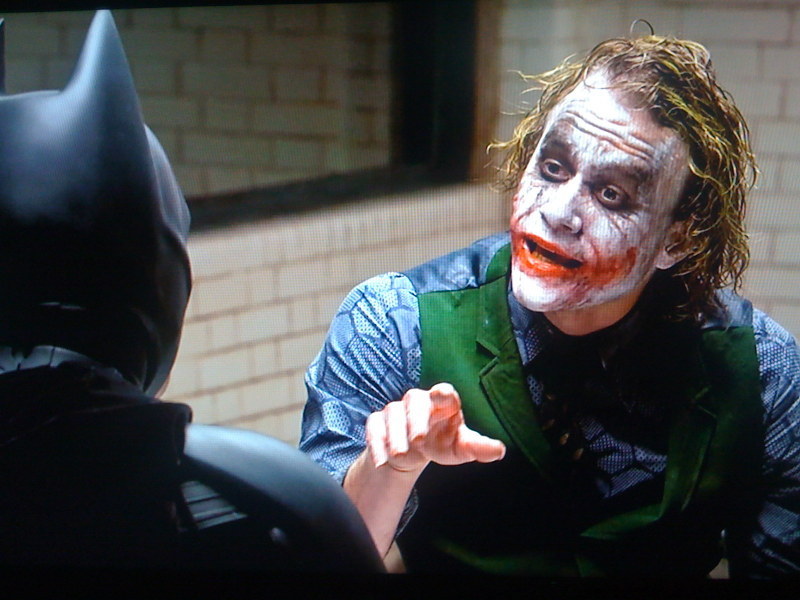
The Joker is an American villain in the Batman films and in this series he is played by Heath Ledger. He is a violent psychopath that chooses to kill innocent people for his own entertainment. He could be considered to be quite a lonely character as the audience is never told about his family or past and we always see him by himself in the films. It could be said that Batman is Joker's only 'friend' in the sense that the Joker needs Batman to keep him mischievous and depriving Gotham City from its joy and happiness. So, without Batman keeping things in Gotham in order, I don't think the Joker would be around to mess things up with his elaborate plans.
Overall I think that the Joker is a great asset to the Batman films and Heath Ledger's portrayal of him makes the character even more amazing and enjoyable to watch.

The Joker is one of the main characters of the series and so the audience will pay a lot of attention to him. In some cases the audience may feel like they are involved in the scenario and so feel frustration or anger at certain things that the character does. He is an iconic character as he is portrayed by a very talented actor, Heath Ledger, some saying that he did the best portrayal of the twisted character.
With this character Ledger was also able to mimic any personality or behaviour perfectly. For instance, in a scene in The Dark Knight we see the Joker dressed up in a nurses attire whilst he talks to Harvey Dent (the video below).


Eddie the Head is the mascot of the British heavy metal band, Iron Maiden. Eddie is an iconic character that features in some of the band's music videos. This is a memorable music video character because it is unique and not many other bands have a character that frequently features in their music videos.

The video above is of Iron Maiden's song 'Speed of Light', in which we see the character of Eddie travelling through different iconic games.

Leonard Shelby (Guy Pearce), from Memento, is an ex-insurance investigator, who left his job after suffering an attack from the rapists and murderers of his wife, which left him with brain damage and the incapability of creating new memories, with the last thing he remembers is the death of his wife. The film situates him on the hunt for the killer of his wife, but his amnesia is a massive obstacle that he struggles to get over throughout the film. 
Leonard is a very smart character, and figured out a system that allows him to send messages to his future self, who will soon forget that moment had ever happened. He does this by taking polaroid photos of people and places of interest for his investigation, and as for clues to his wife's killer, he tattoos himself in order to have permanent notes that he can't lose. These acts show his intelligence, and we can see that his has gotten use to losing his memory every few minutes or so, and that this system is a clever way of keeping up with his own journey.

Narrative theories

Narrative is the way that the story/plot is told.  For example, is the narrative told in first person or are we shown it through a character's flashbacks?
Here are three narrative theories that form the base of a film; how it develops, how it looks/sounds and what the purpose of the characters are.

The three narrative theories:

Todorov:
Todorov produced a theory that could be applied to all films and describing how they work and their basic narrative. His theory suggests that all films start with an equilibrium, where everything is normal and good, and then there is a disequilibrium where something bad happens. After this is resolved there is then a new equilibrium and everything is back to normal again.

Barthes:
Barthes designed the three codes on which films are based. These three codes cover all aspects of a film; they are:
  1. technical - the camera angles, length of shot, sound and editing
  2. verbal - the dialogue and what people say
  3. symbolic - this is the denotations and connotations of the mise-en-scene (the things in the scene). For example, red roses signify romance
Propp:
Propp created the theory that certain types of character have a specific influence on the narrative
 
Levi-Strauss:
This narrative theory states that we see world, people and places by forming binary oppositions, meaning that all narrative are based around the idea of conflict between two opposites.
  • good vs bad
  • men vs women
  • light vs dark
  • technology vs nature
  • democracy vs dictatorship

Monday, 5 October 2015

Genre: Horror

A typical horror film usually features a group of teenagers or a family with young children that either become involved in the murderous games of a psychopathic serial killer or they are terrorized by a supernatural presence. Horror films are usually set in abandoned or isolated locations that can be known for having a bad past. For example: a warehouse; a forest or an abandoned house are stereotypical settings for a conventional horror film.

A professionally made horror short film - textual analysis

  
In this short film a man is finishing his day at work and getting ready to go home. He then receives an email titled 'goodbye', to which a video is attached. He clicks on the email and starts to download the attached file. He opens the attachment to find a video of an anxious woman sitting at a desk in a dark room, filming herself on what appears to be a computer webcam. In the video the woman is talking, whilst in the background of the video we can see a dark-clothed figure walking towards her from the back of the room. The video continues as the dark figure moves closer, and the shot changes to the man, as we see a white clothed woman appear behind the man...


In general I like this video because the idea is cool, although I did see many similar videos while searching for horror short films. There is, in particular, one shot that I do like which is the shot where we see the man put the cup in the coffee machine and the camera changes to a shot from behind the cup. I think that this is a cool shot because its unique and gives a different perspective of what's happening in the scene. If possible I would like to use a shot like this for my coursework because I really like it and it's different.


If I were to create a piece of coursework in this genre then I would most likely make a short film. A possible idea would be to do a continuation of my AS coursework; revealing what happens to the girl after she has been kidnapped. With this I may use the idea of flashbacks to show what the girl was previously up to the day or two before. This would mainly be scenes of her socialising with friends and having fun. These flashbacks would then be cut with shots of her in a dark and empty room. I am not too sure how this film would end without it being too long. Another idea would be to cut shots of her in a dark room with shots of people putting up missing posters/a police investigation into finding her. With this film I would leave it as a cliff hanger so we would see shots of the police walking through a dark corridor trying to find the room that the girl is in; this would be cut with shots of the door from inside the room (girl's point of view), hearing people in the corridor. As the police get closer to the door the cuts between the two shots gets quicker and the music will be more dramatic. There will be no or little dialogue in this scene so music will be used to build tension. The film would end with the police opening the door and revealing only a small part of the dark room, and then cut to black. This would mean that neither the audience or the characters would know if the girl was found or not...

Below is my AS coursework from which this idea would follow from:

Genre: Documentary

To help towards ideas for our final video, my group and I have been researching and thinking about different genres of film. We will research the genres in some depth, as well as looking at existing examples of short films and music videos of each genre.
 
First, documentaries. This genre of film is a more serious approach to film (much like a drama) but it is real and the story and what is happening is all true. This could be a documentary about anything from animals to buildings. I enjoy watching wildlife documentaries as I am interested in animals so I know what can make one interesting or boring. One thing that is important in a documentary is to keep the story interesting. This is because some audiences may get bored if someone is talking about one subject for an hour, however I do not see this as a big problem if the documentary is good enough to disguise it.
 
'One series of documentaries that was recently shown on BBC is 'David Attenborough's life stories'. This is Attenborough at his best. These documentaries are exciting, fact filled, and enjoyable. One thing that I particularly like about his documentaries is that after the program, you get to see how the camera crew found and filmed the animals. Something that I find amazing is how they will look years for maybe only ten minutes of good footage, but it is well worth the wait. This is exactly what happened in the last episode of life stories that I watched, in which the crew had been searching for 2 years to see the endangered African Wild Dog hunting in its habitat. Eventually, they found a pack of the dogs and managed to get ahead of them. By doing this, they were able to capture footage of the entire chase, catch, and kill. They were also very lucky to get more exciting film than expected when a hyena decided to come within a couple of meters of one of  the cameramen, fight with the pack of dogs and be chased off by them. This unexpected action is what a great documentary needs.' - Charlie

The most important feature, in my opinion, of a good documentary is a strong, authoritative voice over. This is needed so that the subject can sound serious, interesting, The footage also needs to be genuine (unless staging a re-enactment) and exciting.
 
One good short film that I found was about a double amputee and his wife...
I found this film very insightful and by the end of it, I felt like I knew the couple. This engagement is what makes a good documentary.

Sunday, 4 October 2015

Genre: Romance

In a romance short film it is stereotypical for their to be a male 'hero' in a 'boy meets girl' style scenario. Throughout the film it is suggested that the boy and girl would/should get together but for some reason they end up separating and going their different ways. However, in the end of the film they are reunited and there is a traditional 'happy ever after'.

Most romance films are aimed at a female demographic (the target audience), although other elements from other genres can be mixed in with romance to widen the target audience. For example, a common genre mix is romantic comedies.

A professionally made romance short film - textual analysis
 
 
This short film is pretty cool as it features the story of two teenagers that meet at a party, but instead of hearing what they are saying, we see clips of their adventures and hear a voice-over of a male talking about a past relationship, which we understand to be the one shown in the video. At the end of the video we find out that the 'narration' is in a fact an email that the male character is writing to his ex-girlfriend as he reminisces over their past relationship. Throughout the entire video there is no other dialogue but there is slow music with a gentle beat playing. I think that this type of music has been used as it makes the audience understand that the general theme of the video is sad, and so the slow rhythm portrays this. 
 
I like how the story is told in this way because it is different from others that I have seen and it also allows you to watch the video without paying too much attention to what is happening in each shot - the audience can mainly concentrate on what is being said by the male character and from this they can picture for themselves the relationship between the two teens. I also like the range of shots used to show the actions and emotions of the characters, something that I will bare in mind when creating my own coursework.
 
Using these thoughts, I have created an idea for a music video in this genre. This video would feature a male and female character (age uncertain, maybe late teens/mid-twenties) and the video would tell a story of their relationship. This video would show more of the positive side of being in a relationship, rather than showing the negatives. The video would contain montage scenes of the couple going on days out, to theme parks and the beach for example. For this idea I would choose an up-beat song, something like She's So Lovely by Scouting for Girls. If I were to film this video then I would use a range of shots, like panning shots to establish location and zooms to show the happy emotions on the character's faces.
 

Friday, 2 October 2015

Genre: Drama

A drama usually portrays realistic and believable characters as well as realistic settings and stories. Most dramas aim to move the audience in an emotional way as it easy for the audience to empathize with and sympathize with these believably realistic characters. At the centre of a drama plot there is always some form of conflict.


This short film is about two boys who are having to hide in their house after the breakout of an infectious zombie invasion. This short film features scenes of them alone in their house, heating cold baked beans from a tin and they are squabbling about being allowed to go play outside, as the little brother does not understand the scenario of the apocalypse.
 
Within this genre there is a wide use of zooms on characters faces to show the emotion and tell the audience what is happening in the scene through body language and facial expressions. Something that else that is widely used is long cuts of shots to show what is happening in the scene and allowing the audience to focus on what is being shown.